
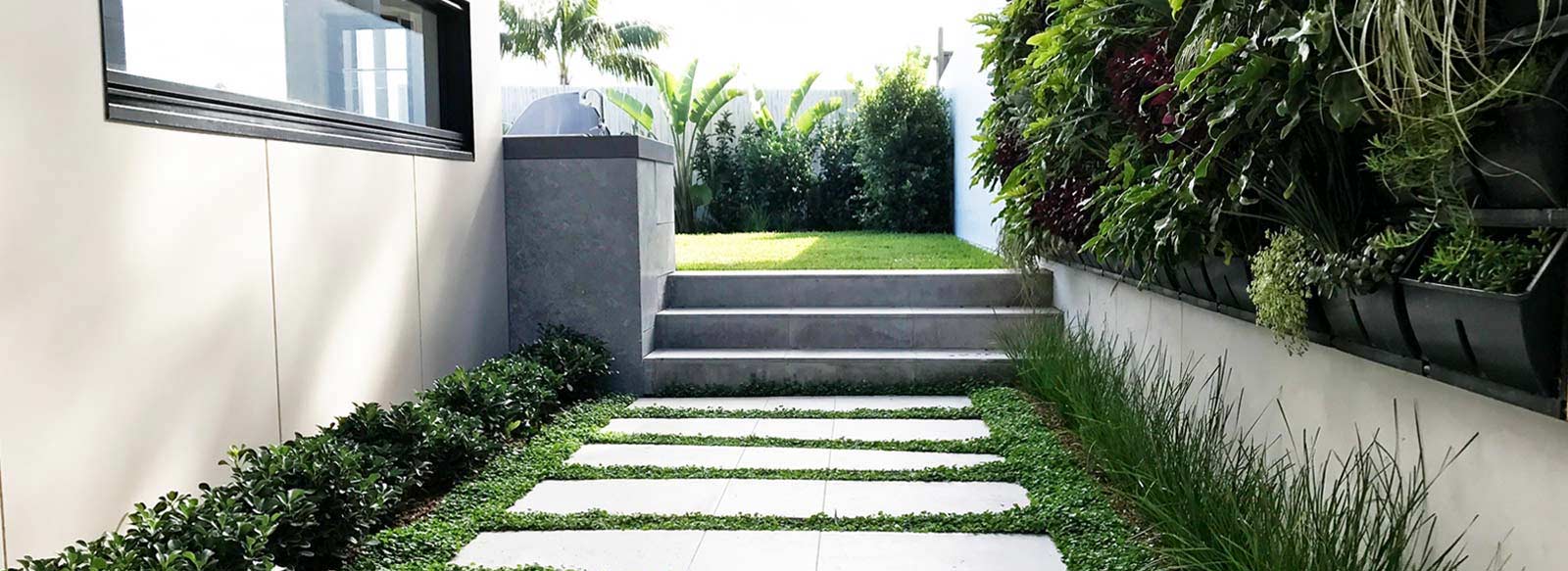
04 Aug Best Plants Northern Beaches Coastal Gardens
Best Plants for Northern Beaches Coastal Gardens (2026)
The best plants for Northern Beaches coastal gardens are those that tolerate salt spray, sandy soil, and sustained wind exposure while giving structure, screening or feature interest. Australian natives dominate any well designed coastal planting list because they evolved in these conditions, though selected hardy exotics also perform well. Structural plants include coastal banksia and pandanus. Screening plants include lilly pilly and viburnum. Ground covers include native pigface and coastal rosemary. Feature plants include gymea lily and dragon tree.
Planting the wrong species on a Northern Beaches site is one of the most common ways to waste money on a garden. Plants that would thrive in a sheltered inland Sydney garden will struggle or die on an exposed coastal block. Get the plant selection right and the garden practically maintains itself.
Structural plants (the backbone of the garden)
Coastal banksia (Banksia integrifolia): Native to the NSW coast including the Northern Beaches. Tolerates salt spray, sandy soil and wind. Grows to 10 to 15 metres. Provides year-round structure and feeds native birds. Excellent for larger gardens and buffer planting.
Pandanus (Pandanus tectorius): Iconic coastal Sydney form with sculptural aerial roots and spiky foliage. Thrives in sand. Grows to 4 to 6 metres. Perfect feature specimen for coastal contemporary designs.
NSW Christmas bush (Ceratopetalum gummiferum): Small to medium native tree with cream flowers turning red at Christmas. Handles Northern Beaches conditions well in well-drained positions.
Grass tree (Xanthorrhoea): Ancient, slow growing, sculptural. Not cheap but adds instant character. Suits contemporary and native gardens on well drained sandy sites.
Screening plants (privacy and boundaries)
Lilly pilly (various Syzygium species): The workhorse of Sydney hedging. Fast growing, dense, evergreen. Handles coastal conditions in most positions. Varieties like Syzygium ‘Backyard Bliss’ or Syzygium australe ‘Resilience’ are commonly specified for hedges of 2 to 4 metres.
Viburnum tinus and Viburnum odoratissimum: Hardy evergreen screening. Not native but performs reliably in Northern Beaches gardens. Tolerates some coastal exposure with protection.
Coastal tea tree (Leptospermum laevigatum): Fast establishing native with white flowers and twisted trunk character. Excellent for exposed coastal boundaries and buffer plantings.
Westringia fruticosa (coastal rosemary): Grey foliage, white flowers, extremely tough. Can be used for low informal hedging or mass planting. Handles the harshest coastal exposure.
Ground covers (the finishing layer)
Native pigface (Carpobrotus glaucescens): Succulent trailing native with pink flowers. Tolerates salt spray and sand. Excellent for embankments, dunes and slopes.
Dichondra (kidney weed): Soft green ground cover with round leaves. Suits sheltered positions and semi-shade under trees.
Myoporum parvifolium: Fast establishing native ground cover with small leaves and white flowers. Handles full sun and coastal exposure.
Native violet (Viola hederacea): Cool climate ground cover with purple and white flowers. Suits shaded areas under mature trees.
Feature and accent plants
Gymea lily (Doryanthes excelsa): Massive strappy foliage and dramatic red flower spikes. Native to the Sydney region. Slow growing but iconic once established. One of the best statement natives for coastal gardens.
Kangaroo paw (Anigozanthos hybrids): Vivid feature flowers over grey-green strappy foliage. Best in well drained sandy soil in full sun. Multiple flowering periods per year.
Dragon tree (Dracaena draco): Not native but performs extremely well on coastal Sydney sites. Sculptural silhouette, drought and salt tolerant. Excellent feature for contemporary designs.
Frangipani (Plumeria rubra): Not native, drops leaves in winter, but handles Sydney’s coastal warmth beautifully in sheltered positions. Iconic in Northern Beaches gardens.
Plants to avoid or use carefully
Some plants that are popular elsewhere in Sydney struggle on exposed Northern Beaches sites. Camellias generally prefer sheltered, protected positions and don’t thrive in high salt exposure. Roses can work in sheltered sunny courtyards but not in beachfront positions. Deciduous ornamentals like ornamental pear give beautiful autumn colour but suffer in constant salt wind. Bamboo can be invasive on sandy soil unless in physical root barriers.
Site-specific advice
Beachfront (within 200m of the beach): Prioritise the toughest natives. Coastal banksia, pandanus, coastal tea tree, westringia, pigface. Test any non-native species in a protected pocket before committing to mass plantings.
Middle band (200m to 2km from beach): Full palette available. Most Australian natives thrive. Hardy exotics like frangipani, dragon tree, viburnum all work well. This is the most flexible planting zone.
Sheltered hinterland pockets: Broader range of plants viable. Camellias, magnolias and more delicate species become options in these positions.
Design principles
Group plants by water needs so irrigation zones work efficiently. Layer heights: ground cover, mid-storey shrubs, canopy trees. Repeat plant species for cohesion, don’t add one of everything. Prioritise evergreen structure so the garden always looks resolved. Choose species that give something in each season, whether flower, form, foliage colour or bird activity. Match plant to position, not the other way around.
At Podology, we design gardens across Manly, Mosman, Freshwater, Avalon and Palm Beach. Site-specific plant selection is a core part of every design. See our green walls page for vertical planting, or our related post on backyard renovation cost for full project pricing.
Frequently Asked Questions
What is the toughest plant for a Northern Beaches beachfront garden?
Native pigface (Carpobrotus glaucescens) is arguably the toughest ground cover. For upright plants, coastal banksia and pandanus are both extremely tough. Westringia fruticosa handles almost anything the coast throws at it. If you plant these species you can be confident of establishment on almost any Northern Beaches site.
Can I grow a lawn on the Northern Beaches?
Yes. Warm season grasses like Sir Walter buffalo, kikuyu and couch all perform well. Sir Walter is the most common specification for Sydney residential lawns. Sandy Northern Beaches soil benefits from initial soil improvement (compost and organic matter) before turf installation.
When is the best time to plant a new garden on the Northern Beaches?
Autumn (March to May) is the ideal time. Soil is still warm, rainfall is more reliable, and plants have months to establish roots before summer stress. Spring (September to October) is the second best option. Avoid planting in the hottest months of summer or coldest weeks of winter.
Do I need irrigation for a coastal Northern Beaches garden?
For any newly established garden, yes, at least for the first one to two years. Even native plantings need reliable water while roots establish. Once established, well selected native gardens can survive on rainfall alone in most Northern Beaches conditions, though most gardens benefit from occasional deep watering during dry periods.
How do I stop plants dying from salt spray?
Choose salt tolerant species from the start. Position more sensitive plants in the lee of walls, fences and larger salt tolerant plants. Rinse foliage occasionally after major salt-carrying storms if you have expensive specimen plants. And accept that on truly exposed frontline sites, non-tolerant species will struggle regardless of care.
About Podology
Podology is a landscape design and construction studio based on Sydney’s Northern Beaches. We specialise in decking, retaining walls, structural landscaping and full backyard transformations across Manly, Mosman, Avalon and surrounds.
Planning a project on the Northern Beaches?
Podology is a Northern Beaches landscaping studio that designs and project-manages full outdoor builds. We take you from concept through construction with one point of contact, fixed pricing, and the right specialist trades for every stage.
Get a free quote or call 0411 808 998 to chat with our team.
Every good garden starts with a conversation.
Call Liz and Nick direct, or fill in the form. We aim to respond to every enquiry within one business day.